

Handling customer claims requires more than responding to a damaged-item complaint. Interstate movers must follow federal claim-processing requirements, maintain documentation, acknowledge proper claims within 30 days, and act on them within 120 days. A structured process helps teams stay consistent from filing through resolution.
Claims are a normal part of running a moving company. A piece of furniture is damaged, an item cannot be located, or a customer disputes its condition after delivery. What matters operationally is what happens next.
For interstate household-goods moves, handling customer claims involves both customer service and federal claim-processing requirements. The company needs to know when the claim was received, what documentation supports it, who is responsible for the next action, which valuation level applies, and when a response is due. Without a defined process, those details can end up spread across inboxes, photos, spreadsheets, text messages, and individual employees. A structured claims workflow keeps the case connected to the move and gives the team a clear record from the first notice through final resolution.
What is a customer claim in the moving industry?
A customer claim is a written request for compensation for loss, damage, injury, or delay associated with a shipment.
For claims subject to 49 CFR Part 370, a valid written claim must contain enough information to identify the shipment, assert that the carrier is liable for the alleged loss or damage, and request payment of a specified or determinable amount. A notation on a delivery receipt or damage inspection, by itself, does not necessarily satisfy those filing requirements.
That distinction matters for moving companies because a complaint and a formal claim are not always the same thing.
A customer saying, “My table was scratched,” requires attention, but the claims team also needs to establish whether a formal claim has been filed, connect it to the correct move record, and document what the customer is requesting. Once a proper claim is received, it should become a tracked case rather than another message sitting in someone’s inbox.
Which moving claims are subject to federal rules?
The federal requirements discussed in this guide apply primarily to interstate household-goods transportation. Moves performed entirely within one state may be subject to different state or local requirements. FMCSA specifically advises consumers moving within one state to check the applicable state rules.
How long does a moving company have to handle a claim?
For interstate claims, movers generally need to acknowledge a proper written claim within 30 days and pay, deny, or make a firm settlement offer within 120 days of receiving it.
FMCSA also tells consumers they have nine months from delivery to file a loss or damage claim.
The timeline is easy to remember:
- 9 months: Customer filing period for loss or damage
- 30 days: Mover acknowledges receipt of the proper claim in writing
- 120 days: Mover pays, denies, or makes a firm written settlement offer
- Every 60 days after that: If the claim remains unresolved, the mover provides another written status update explaining the delay
Under 49 CFR § 370.5, carriers must acknowledge a proper claim in writing within 30 days unless it has already been paid or denied during that period. The regulation also requires the carrier to create a claim file and record the date the claim was received. Under 49 CFR § 370.9, the carrier must pay, decline, or make a firm compromise settlement offer in writing within 120 days. If the claim cannot be resolved during that period, written status updates are required at the 120-day point and every succeeding 60 days while it remains pending.
For an operator, the practical issue is not memorizing regulations. It is making sure the received date, acknowledgment date, owner, status, supporting documents, and next required action are visible in one place.
How to handle customer claims step by step
A consistent process makes handling customer claims easier for the customer, the claims team, and management. The exact investigation will vary by case, but the workflow should usually follow four stages.
1. Log and acknowledge the claim
Start by recording the claim as soon as it is received.
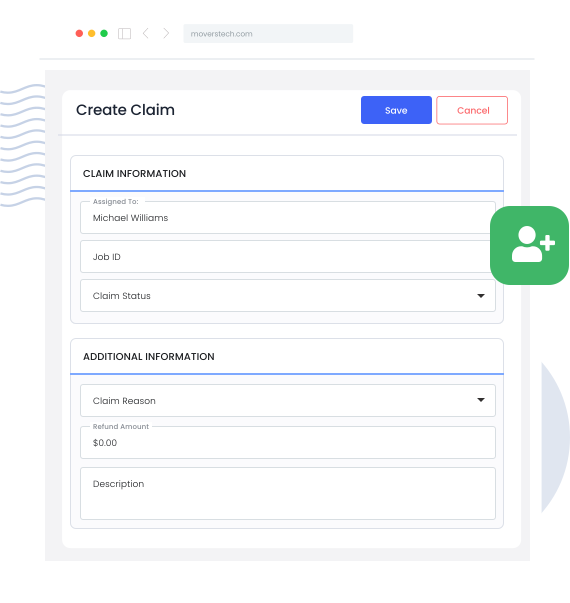
The claim record should clearly identify the customer, move, date received, items involved, amount claimed, and person responsible for handling it. Any supporting material supplied by the customer should be connected to the same record.
For interstate moves subject to Part 370, acknowledgment should be sent in writing within the required 30-day period. If additional documentation is needed to process the claim, that can also be identified in the acknowledgment. The important operational principle is ownership. Someone should always know who is responsible for the next action and when it is due.
2. Investigate using the complete move record
Next, review the information created before, during, and after the move. That may include the inventory, bill of lading, signed documents, condition notes, pickup and delivery photos, crew notes, customer communications, and other records relevant to the disputed item. This is where good documentation during the move becomes valuable.
If a damage claim is being investigated weeks later, the claims team should not have to reconstruct the job from several employees’ memories. The closer the claim record is connected to the original move documentation, the easier it is to establish what happened.
Photos are particularly useful when condition is disputed. FMCSA also advises customers to document damage with photographs and, where possible, maintain photographs from before loading and after unloading.
3. Determine liability and the applicable valuation
The amount a mover may be responsible for depends partly on the liability protection selected for the shipment.
For interstate moves, movers must offer Full Value Protection and Released Value Protection.
Under Released Value Protection, the mover generally assumes liability of no more than $0.60 per pound per article at no additional charge. A 50-pound item would therefore have a maximum liability of $30 under that level of protection.
Under Full Value Protection, the mover’s responsibility may involve repairing the item, replacing it with a similar item, or making a cash settlement based on replacement value, subject to the applicable terms and limitations.
The claims team should therefore confirm the customer’s selected valuation and relevant shipment documents before deciding how the claim should be resolved.
4. Decide, communicate, and document the outcome
Once the investigation is complete, communicate the decision clearly and keep the supporting reasoning with the claim record.
For claims subject to 49 CFR § 370.9, the carrier must pay, decline, or make a firm compromise settlement offer in writing within 120 days of receipt unless the claim remains under investigation and the required written status updates are provided.
Whatever the outcome, the record should show:
- What was decided
- When it was decided
- Who approved or handled the action
- What was communicated to the customer
- What supporting information was used
That creates a complete history if the customer follows up later and gives management usable claims data rather than a closed email thread.
How can moving companies handle claims more efficiently?
The most efficient claims process keeps the claim, job information, documents, ownership, status, and communication connected in one system.
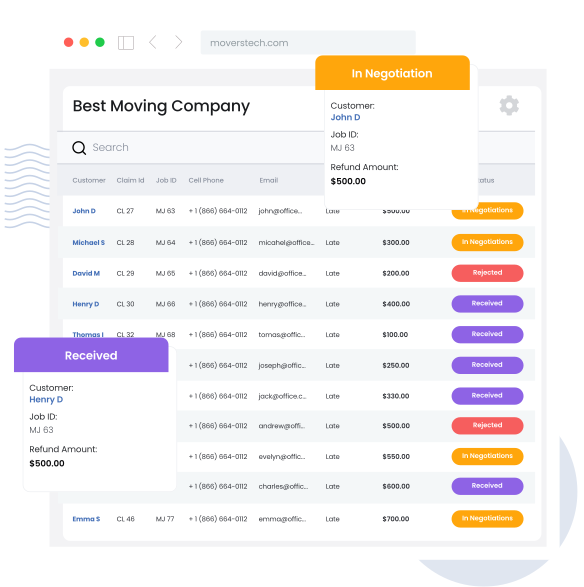
The alternative creates predictable problems. One employee has the photographs. Another has the customer’s email. Someone else updated a spreadsheet. Management knows a claim exists but cannot immediately see who owns it or how long it has been open. Purpose-built claims management software for movers brings that information together.
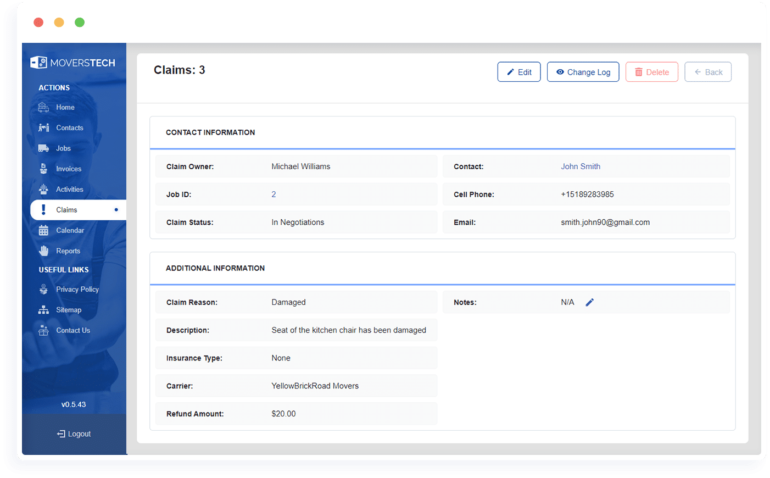
MoversTech allows moving companies to log and organize claims, assign responsibility, monitor progress, keep claim information connected, and see where each case stands. Its claims tools are part of the broader moving CRM rather than a standalone system, so teams can work from the customer and job information already connected to the move.
The value is not that software makes the claims decision for the company. It does not determine liability or replace the mover’s responsibility to follow applicable regulations. Its role is to give the team control over the process: who owns the claim, what information supports it, what still needs attention, and whether a case is progressing or sitting unresolved. That distinction fits MoversTech particularly well. Automation supports the workflow without forcing every company into one rigid claims process.
Why claims documentation should start before a claim exists
A strong claims process does not begin when the customer reports damage. It begins when the move is documented. Inventory records, signed documents, condition notes, photographs, crew information, and clear customer communication all make a later investigation easier.
MoversTech connects claims with a broader end-to-end moving operation that also includes digital documents, dispatch, customer information, and reporting. This reduces the amount of information that has to be reconstructed once something goes wrong. It also gives companies room to configure workflows around how their own teams operate rather than adopting the same claims structure as every other mover.
Can claims data help prevent future problems?
Yes. Closed claims can show patterns that are difficult to see when every case is treated as an isolated incident. A company may discover that claims repeatedly involve a particular item type, crew, process, service, route, or point in the move. That makes claims data operational data.
MoversTech’s claims functionality is designed to help companies review patterns and identify recurring issues so they can address the cause rather than repeatedly resolving the same problem after it happens.
For example, repeated furniture damage could point to a packing or handling procedure that needs attention. Claims concentrated around a particular workflow may reveal a documentation gap. A high number of unresolved cases may indicate that ownership inside the office is unclear. The goal is not simply to close claims faster. It is to learn from them.
Reduce customer claims before they happen
Claims cannot be eliminated completely, but consistent operations can reduce avoidable disputes.
Good documentation at pickup and delivery creates a clearer record of item condition. Clear assignments help crews know who is responsible for each part of the job. Organized dispatch helps teams coordinate trucks, crews, and move requirements without relying on scattered information.
Customer communication matters as well. Expectations around valuation, documentation, pickup, delivery, and what happens if something goes wrong should be clear before the claim stage begins. That combination gives both the mover and the customer a better record of what took place.
Where does MoversTech fit into the claims process?
MoversTech does not replace a mover’s claims policy, determine liability, or change federal and state requirements. It gives moving companies a structured system for managing the operational side of the claims process.
Claims can be logged and tracked from filing through resolution. Teams can assign responsibility, keep supporting information together, monitor progress, keep customers informed, and review historical claims for patterns. Because claims sit inside the same end-to-end CRM used for other parts of the moving operation, companies do not have to treat the claim as a completely separate record once the move is over.
That is where the broader MoversTech model matters: flexible workflows, connected moving data, automation, and real human support, without forcing every company to operate according to the same predefined process. MoversTech is built specifically for moving companies and can be configured around how an operation already works.

A structured claims process gives moving companies more control
Handling customer claims well comes down to consistency. Know when the claim arrived. Keep the supporting documentation connected to the move. Confirm the applicable liability protection. Give the case a clear owner. Track the required dates. Record what was decided and why.
For interstate movers, that structure also helps teams work within federal claim-processing requirements rather than relying on memory when deadlines approach.
MoversTech brings claims into the same flexible, end-to-end platform used to manage the rest of the moving operation, giving teams clearer ownership and visibility from the original job through final resolution. To see how the claims workflow can fit the way your company already operates, schedule a private demo
Frequently Asked Questions
What is a customer claim in the moving industry?

A customer claim is a written request for compensation related to loss, damage, injury, or delay involving a shipment. Under federal claim-processing rules, a proper claim must identify the shipment, assert carrier liability, and request a specified or determinable amount of money.
How long does a customer have to file a moving claim?
FMCSA states that customers generally have nine months from the date of delivery to file a loss or damage claim for an interstate household-goods shipment. Intrastate claim requirements may differ by state.
How long does a moving company have to respond to a claim?
For claims subject to 49 CFR Part 370, the mover must generally acknowledge a proper written claim within 30 days and pay, deny, or make a firm settlement offer within 120 days. If the claim remains pending, written status updates are required every 60 days after that.
How much is a moving company liable for damaged items?
It depends on the liability protection selected and the circumstances of the claim. Under Released Value Protection for interstate household-goods moves, liability is generally limited to $0.60 per pound per article. Full Value Protection provides a higher level of liability and may involve repair, replacement, or a cash settlement.
How can a moving CRM help with customer claims?
A moving CRM can keep claims, job details, documentation, assigned responsibilities, status information, and follow-up in one system. MoversTech also allows teams to monitor claim progress and review historical claims for recurring patterns.
